The Brainrot Industrial Complex
Peace be upon you, fellow digital wanderer.
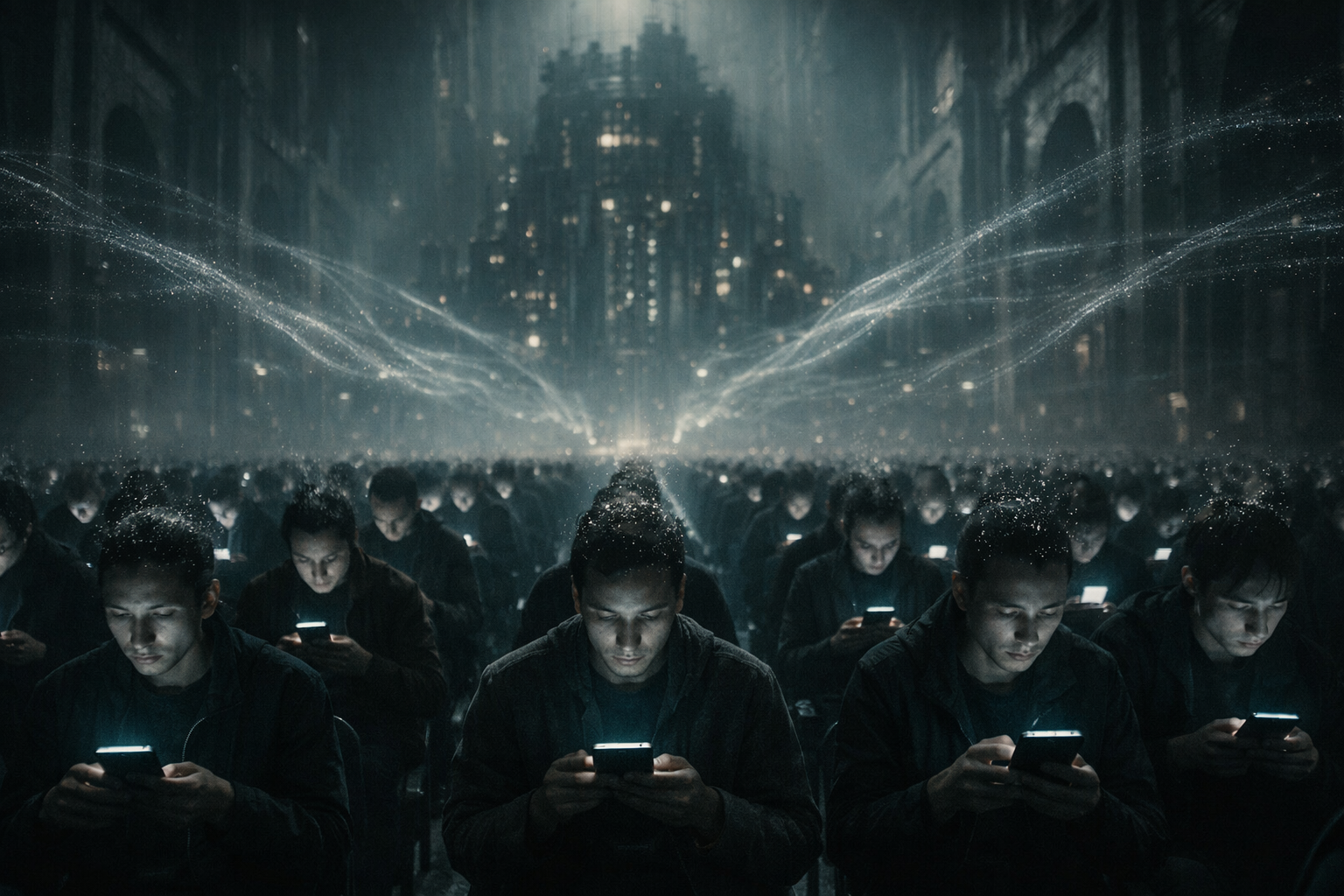
There is perhaps no better term to describe the condition of modern society than the internet slang: “brainrot.” A phrase often used jokingly by the younger digital native generation to describe that familiar state where the mind feels dulled, overstimulated, unable to hold a single thought for long.
“This meme gave me brainrot”
The term is often said in humour, but beneath the joke lies something real. There are underlying signals of, for the lack of better term, rotting of the brain, one’s conscious mind.
Interestingly, the term did not emerge from critics nor did it come from academics. The term “brainrot” came from the very generation that is immersed in it. A kind of self-aware diagnosis. They feel something is off, even if they don’t fully articulate why.
Here is how I would define “brainrot”:
Brainrot is the gradual erosion of one’s ability to think, focus, and reflect, caused by continuous exposure to high-stimulation, low-substance digital input.
The term “Industrial Complex” here came from the phrase popularised by Dwight D. Eisenhower, “The Military-Industrial Complex”. In simple terms, it describes the tight relationship between government, military, and private industry, where each benefits from the continued production of weapons and wars. It is not merely an industry that produces weapons. It is a complete system designed to sustain the need for them.
And we are witnessing today something similar. The “brainrot industrial complex” is a whole industry designed to hijack your attention, by making your brain’s reward centers produce dopamine as cheaply and abundantly as possible to maximise profits.
The system offers this “cheap thrills” as a remedy for boredom, for restlessness, and perhaps for something deeper we struggle to name.
The modern internet is no longer designed to inform you, it is now designed to dissolve your ability to think clearly. The “brainrot” phenomena is not just distraction, but decay.
There was a time when the word “distraction” carried a far heavier meaning than it does today. In older English, to be “distracted” did not mean to lose focus momentarily, it used to mean “to be mentally disturbed”, a mind pulled apart, unable to hold itself together.
The term itself comes from the Latin distrahere, which means to draw apart, to tear in different directions.
Today, when we get distracted, what are we drawn apart from? Think about this.
What was once a condition of disorder, has now become a condition of normalcy. What was once described as the mind being “pulled apart”, is now the default state of the modern internet user.
Distraction is not a new crisis. Humans have always been susceptible. The Romans worried about the spectacle of the Coliseum, they lamented moral decay from games and gossip. The Victorians panicked over novels that stole attention from more serious pursuits.
What is different today is the scale, intensity, and intent. The brainrot industrial complex is not creating a new weakness, it is weaponising one that has always existed.
What can we do about it?
We are not yet in a position to dismantle the whole system. It requires policy reform, platform regulations, and a lot of activism. I’m not saying that we should not do that, for now, I just want to leave you with practical remedies for the individual self.
Awareness is the first step. We cannot dismantle the system, but we can navigate it with intention.
Start noticing the pulls on your attention, pause before you scroll. Observe the triggers: boredom, anxiety, existential itch. These are what the brainrot industrial complex exploits. Take small steps to reclaim your attention.
Most important is to be more intentional in your digital media consumption. Do not let the algorithm decide what you should indulge. Choose consciously what enters your mind.
Understand that you are not bored, you are being processed. It is not that you are lacking discipline that makes you easily distracted, it is because you are in the machine optimised for brainrot.
And for those who build, understand this: the systems we inhabit are not inevitable. They are designed.
The feeds, the loops, and the endless scroll, these are choices, not laws of nature. It is possible to build differently. To design tools that respect attention, rather than exploit it. To create protocols that serve users, rather than process them.
A different internet is not a fantasy. It is a matter of intention.
Stay glitched, stay human.
Jibone.